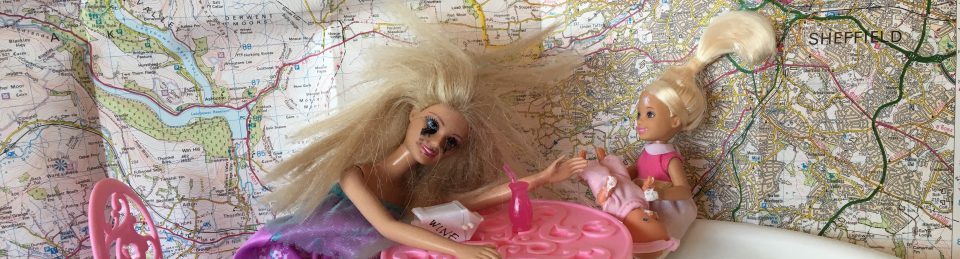

I’m tired.
Tired is my default setting, really.
Sometimes it’s very difficult to work out what I’m feeling underneath feeling tired, because tired is the heavy veil over everything else. It slows my movements and my thinking.
I’m tired by default.
And so are lots of women.
Women, you see, are more likely than men to be the ‘default’ parent. And that’s been especially true during the last six months of the pandemic.
Not only are women one and a half times more likely to have lost their job than men, but they’ve been spending more time juggling household responsibilities. Mothers combined paid work with other activities – usually childcare – for 47% of their pandemic working hours, according to the Institute for Fiscal Studies. Men juggled for 30% of them.
Meanwhile, researchers from the University of Sussex found 70% of mothers were completely or mostly responsible for home schooling during lockdown. Even now the schools are back, women are still the ones most likely to be taking the childcare and work hit, and will continue to do so during this long, looming winter of local lockdowns, tiers, and random isolations.
67% of working women feel like the ‘default’ parent all the time.
And being the default parent is TIRING.
Being the default parent means your kids will walk past your partner to ask you for a snack.
It means if you’re both on the phone for work, they’ll pick you to interrupt.
It means you’re the one being called to wipe the bums and mop up the spills.
It means you’re the one the school calls when someone’s sick – and you’re the one taking the time off.
It means you’re the one getting to grips with the endless school emails, planning the dress up days, the pounds to the teacher, paying for the school meals, booking the parents evenings, emailing the show and tell pics, measuring the feet and ordering the new school shoes/trainers/jumper.
It means you’re organising the family calendar and remembering where everyone has to be when, by what time, in what kit – while your partner asks you every week where the pick up point is.
It means doing the homework, filling in the reading diary, cleaning the uniforms, making the lunches, getting the kids ready, shouting ‘teeth’ and ‘shoes’ a lot in the mornings, turning out the used lunchboxes after school, and constantly chasing the missing water bottles.
It means you’re listening to the friend dramas and long boring stories, keeping up with the mums, negotiating the play dates, hosting them, charming the school office lady, planning the birthday presents, wrapping them – usually alone – and don’t get me started on Christmas.
It means remembering to order the repeat prescriptions, going to the pharmacy, applying the medicine, making the doctors appointments, collecting the samples, waiting for hours in the waiting rooms.
It means being expected to know where every toy and pencil and item of clothing is, at any given moment.
It means picking up the clothes and the towels, hanging the washing, putting it away, wiping up the crumbs, changing the loo rolls, throwing bleach at the toilets while begging people to check and flush, often while your other half ‘didn’t notice,’ or worse, thought it was just your job because you ‘work less’.
It means planning the meals, doing the weekly food shop, making sure the snack cupboard is full, clocking when the milk’s about to run out, cooking the boring everyday meals – and losing both your will to cook the fun stuff and the title of family ‘chef’ which now goes to the other, non-fishfinger cook.
It means – possibly as a residual result of breast feeding and/or mat leave – being the one that gets up most often in the night if someone cries, drying the tears, cleaning up the sick, singing them back to sleep.
When you are on your own, being the default parent means even more. It’s more than just the mental load of your family – it’s a heavy emotional load, too. And it’s why I find the legal phrase ‘equal shared parental responsibility’ occasionally frustrating.
It means packing the bags and keeping track of the clothes and toys across two houses, or facing the wrath of your ex and/or your kids.
It means tying yourself in knots of guilt and exhaustion struggling to carve out one-on-one special time with each child so they can process and vent their day – without their sibling chipping in.
It means being the safe space where your kids lose it, where all restraint collapses, where you get what they later admit is behaviour, tone and attitude they would never display at the other end, with the other parent.
It means being the primary repository for worries, and woes, and the testing ground for the pushing of boundaries.
It means being held to a higher standard than your ex, who can be forgiven for inconsistencies, or for making changes, when you won’t be.
It means they are jealous of your body and your time, tiny, controlling dogs in the manger that want you there always, always the same, their anchor, even when they’ve floated away – where every new dress or new hair style is a trauma, and time with your partner is a betrayal of your love for them that will be met with a backlash of emotion.
It means trying to manage everyone’s feelings and expectations, trying to set boundaries, trying to hold the hearth and home they need within yourself, without losing yourself entirely.
It is no wonder we are #tiredbydefault.
Being the default parent is invisible, thankless hard work. Your children will never be grateful for it; your partner past or present will never fully understand it.
But perhaps the worst thing about it is that you are constantly conscious of it being as much of a privilege as it is a burden…
I WANT to be my kids’ safe space, desperately. I WANT to be the one that looks after them when they are sick. I WANT to be the one they call for when they wake from a nightmare.
I also want it to be okay to say that it’s hard, and that it’s not fair.
I also want someone to SEE it.
And sometimes, I even want a bit of help.
The truth is that gratitude and love stop women from shouting about how unfair it all is. We’re afraid to be seen, to ask for help, for fear that we will be considered ungrateful or unloving if we do. We chose this, after all. And we would choose it again, and again – every time. Of course we would.
But we need to stop allowing that to be turned against us. It’s part of what holds us back.
Because the truth is that being the default parent feeds into all the other inequalities that women face. It is the root of them. It impacts our ability to work, the hours we can work, the level we can work at, our energy to innovate and take risks, our will to make stands professionally or personally, our capacity to practice self care.
Being #tiredbydefault is robbing the world of what else we could give to it if that love, energy, talent, creativity and organisation was supported, recognised, rewarded, amplified and channelled outwards – reaching beyond our own families.
So if you are #tiredbydefault (but not too tired to say so), please put it a comment. And if you can summon up the energy, I’d love to hear about what being the default parent looks like for you.
We can see each other, if no one else does.
And maybe we can even demonstrate by real examples its very real impact.
 Mumonthenetheredge